In February 10, the famous journal of psychiatry - Biological Psychiatry - published a cover article reporting a cooperation research in which professor Xi-Nian Zuo from Institute of Psychology participated. Employing resting state functional Magnetic Resonance Imaging (R-fMRI) technique and graph theory in mathematics, the study conducted a systematic and intensive examination on the topological properties of human brain functional connectome with high precision in individuals at risk for Alzheimer’s disease (AD) (i.e., Mild Cognition Impairment). The findings read: the disease mainly affects the functional connectivity within default network and the connectivity between advanced cognitive network module; the abnormalities of topological properties of brain connectome was significantly correlated with the memory function decline, also the abnormalities could be effectively used to distinguish patients and normal subjects (the correct prediction rate>85%). This work represents the first attempt to explore the functional networks in AD using functional connectome with higher precision (1024 nodes). The test-retest reliability of functional connetome construction method based on wavelet was systematically assessed for the first time. All these outcomes would supply valuable references for the standards on the functional connetomeconstruction.
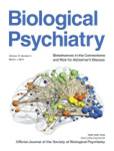 |
| Fig. 1. The famous journal of psychiatry - Biological Psychiatry - published a cover article reporting a cooperation research in which professor Xi-Nian Zuo from Institute of Psychology participated |
This high-impact journal thus launched a special issueon “Disturbances in the Connectome and Risk for Alzheimer's Disease” to report the latest progress in AD researches.ProfessorsArthur W. Toga and Paul M. Thompson, directors of neuroimaging laboratory of UCLA, keyresearchers of Human Connectome Project, were invited to write a commentary‘Connectomics, ShedsNewLightonAlzheimer'sDisease’ and commented:A highly innovative study revealing how brain networks break down in AD.
The study was conducted undercollaborative effortsfromthe State Key Laboratory of Cognitive Neuroscience and Learning at Beijing Normal University, Institute of PsychologyoftheChineseAcademyofSciences and the Affiliated Xuanwu Hospital of Capital Medical University. This work was partially supported by the Natural Science Foundation of China (81030028, 30970823, and 81171409), Beijing Natural Science Foundation (7102090, Z111107067311036), and the Startup Foundation for Distinguished Research Professor of Institute of Psychology, Chinese Academy of Sciences (Y0CX492S03 to XNZ).
[1] Wang J, Zuo XN, Dai Z, Xia M, Zhao Z, Zhao X, Jia J, Han Y, He* Y. Disrupted functional brain connectome in individuals at risk for Alzheimer's disease. Biol Psychiat. 2013; 73(5):472-81.
[2] Toga AW and Thompson PM. Connectomics sheds new light on Alzheimer’s disease. Biol Psychiat. 2013; 73(5):390-92.