Rumination is generally defined as a recurrent and passive focus of thoughts on depressed mood itself and its possible causes and consequences. Sometimes stated as “overthinking”, rumination played a pivotal role in the onset, maintenance and phenomenology of major depressive disorder (MDD). However, the neural mechanism behind this thinking style remains largely elusive (Fig. 1).
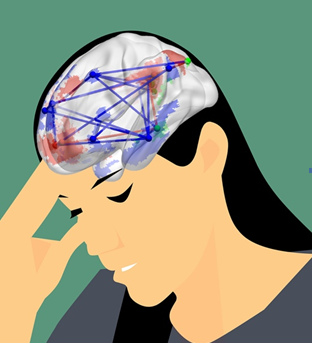
Fig. 1. What is the network mechanism of rumination? Image by CHEN Xiao
Recently, a research team led by Prof. YAN Chao-Gan from the R-fMRI Lab, Institute of Psychology, Chinese Academy of Sciences (IP, CAS) uncovered the underlying network mechanisms during active rumination.
With a modified rumination state paradigm, researchers induced participants to engage rumination when they are undergoing functional magnetic resonance imaging (fMRI) scan. Then researchers computed the Pearson’s correlation among different brain regions’ activities. Results revealed that couplings between the core and the medial temporal lobe (MTL) subsystems of the default mode network (DMN) were elevated while the rest couplings were decreased (Fig. 2).
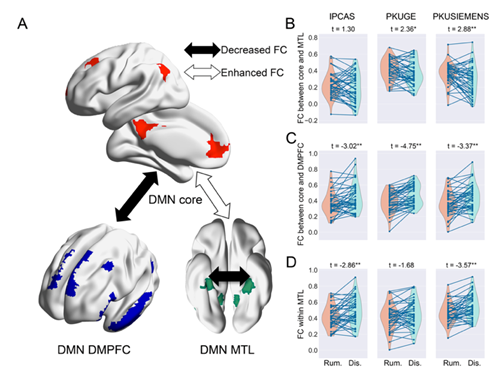
Fig 2. The network mechanism underlying rumination. Image by CHEN Xiao
This dissociation may reflect the over restriction of self-referential and affective appraisal regions on the regions engaging in autobiographical recollection and generation of spontaneous thoughts while other unrelated regions become uncoupled to allow for more information exchange among those involved regions. This finding raised the possibility that a treatment targeting rumination may have better efficacy if it can reduce the over-connectivity and enhance reduced connectivity. One potential way to help individuals to disengage from rumination may be through mindfulness practice, a receptive and non-evaluative attention to the immediate experience.
The above-mentioned work"The Subsystem Mechanism of Default Mode Network Underlying Rumination: a Reproducible Neuroimaging Study." has been published in NeuroImage.
This work was supported by the National Key R&D Program of China, National Natural Science Foundation of China, 13th Five-year Informatization Plan of Chinese Academy of Sciences, Key Research Program of the Chinese Academy of Sciences, Beijing Nova Program of Science and Technology, Scientific Foundation of Institute of Psychology, Chinese Academy of Sciences and China Postdoctoral Science Foundation. The National Center for Protein Sciences provided assistance with data acquisition at Peking University. Dr. Men Weiwei from Peking University also contributed to this work by providing technical support.
Contact:
Ms.Chen LIU
Institute of Psychology
Email: liuc@psych.ac.cn