Depression is a mental disorder that is widespread in the world, with more than 300 million people affected. Although depression can be treated with different methods, only fewer than half of those eligible received treatment because of the difficulty of diagnosing depression. More efficient methods of identifying depression could significantly improve the delivery of services to those in need.
As smartphone has led to an enormous increase in personal convenience and effectiveness, it has also brought many negative effects on the mental health of individuals (e.g., depression). Specifically, depressed individuals may be driven to excessively use their smartphone to get rid of negative emotions, but this excessive smartphone usage consequently elicits more sleep problems, depression, irritability and stress. Therefore, understanding how depression correlates with social behavior on smartphones can be beneficial for early diagnosis of depression.
Previous studies have found that self-reported mobile phone usage did not correlate robustly with objectively measured mobile phone usage. And the increased availability of smartphone-based passive sensing data has provided new perspectives for the investigation of physical, individual differences, or mental health. Recently, a research group led by Prof. Zhu Tingshao from Key Laboratory of Behavioral Science, Institute of Psychology of the Chinese Academy of Sciences collected metadata of smartphone usage from 120 participants using a self-developed Android application (MobileSens) and evaluated depressive symptoms (minor depression) of participants using the Center for Epidemiological Studies-Depression Scale (CES-D).
The researchers designed 11 social behavior from metadata of smartphone usage, including traditional social behaviors like making calls and sending text messages, and the usage of social applications (e.g., WeChat and Sina Weibo, two popular social applications in China). Moreover, circadian rhythms have repeatedly been linked to individual depression. Furthermore, some studies have found that many people with depression show a regular daily pattern of symptoms, usually with more severe symptoms in the morning. To gain deeper insights, the researchers explored the correlation between depression and social behavior on smartphones over 4 periods (all day: 0:00 to 24:00; morning: 6:00 to 12:00; afternoon: 12:00 to 18:00; evening: 18:00 to 6: 00) separately. To examine differences in social behaviors on smartphones between depressed and non-depressed users, the researchers divided participants into two groups based on their scores on CES-D on the cutoff point of 16.
The results showed that depressed users received less calls from contacts (all day: F1,116=3.995, P=.048,=0.033, afternoon: F1,116=5.278, P=.02, =0.044), and used social applications more frequently (all day:F1,116=6.801, P=.01, =0.055, evening: F1,116=6.902, P=.01, =0.056) than non-depressed ones (Table 1).
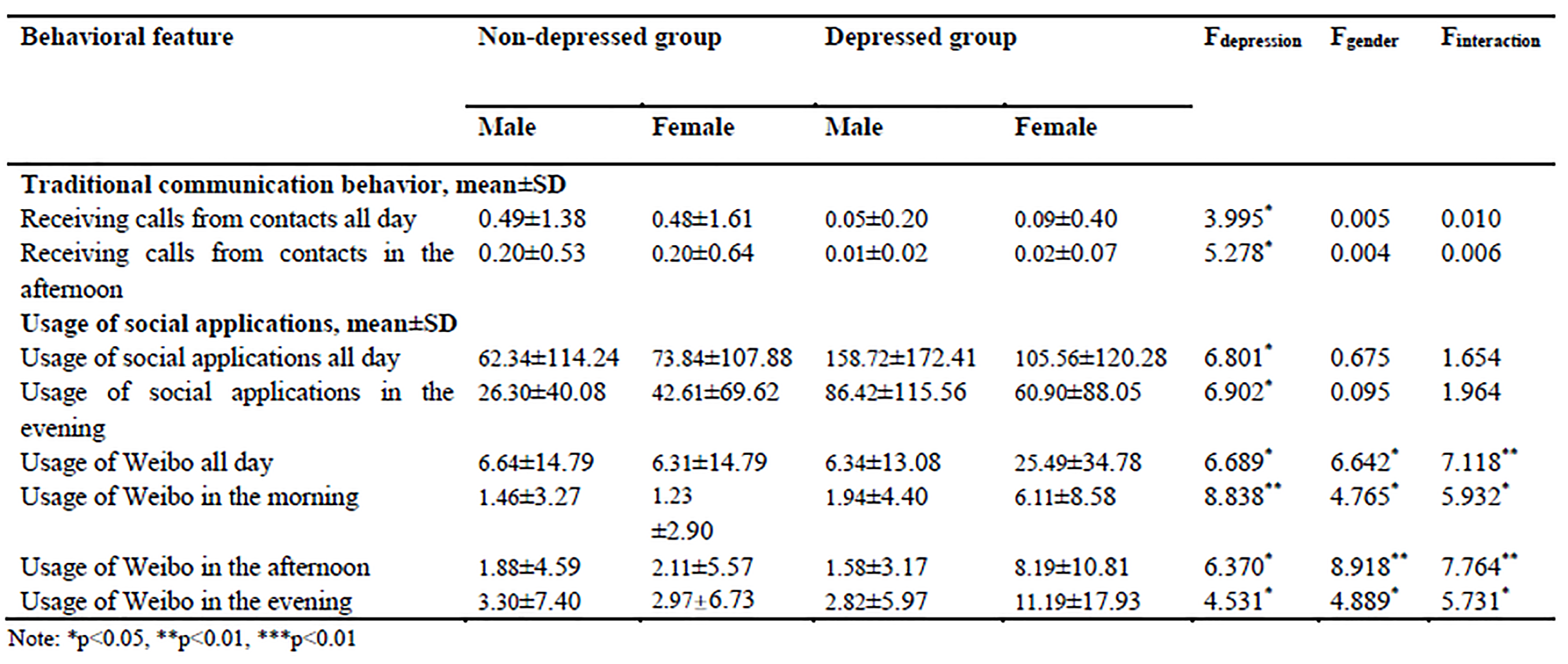
Table 1. Differences in smartphone usage among participants with different depressive symptoms. Image by WANG Yameng.
For the usage of Weibo, the results showed that the main effect of depressive symptom, the main effect of gender and the interaction effect of depressive symptom and gender were significant over 4 periods. Simple effect analyses showed that in depressed group, female used Weibo more frequently all day than male (all day: F1,116=11.744, P=.001, =0.092; morning: F1,116=9.105, P=.003, =0.073; afternoon: F1,116=14.224, P<.001, =0.109; evening: F1,116=9.052, P=.003, =0.072) (Figure 1).
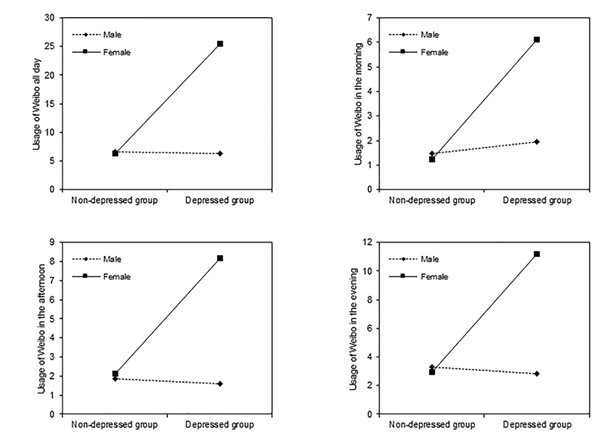
Figure 1. Interactions between depressive symptom and gender on usage of Weibo in different time periods. Image by WANG Yameng.
This study examined the correlation between depression and social behavior on smartphones through usage metadata, and the results showed that non-depressed users and depressed ones have differences in social behaviors on smartphones, and there were gender differences in social behavior among depressed users. This study may be may be of potential value for the early diagnosis system of depression through smartphone usage. Besides, the results of this study also provide useful suggestions to those who are depressive in daily lives.
This work entitled "Examining the Correlation Between Depression and Social Behavior on Smartphones Through Usage Metadata: Empirical Study" was published in JMIR Mhealth Uhealth on Jan 2021.
This work was funded by the Key Research Program of the Chinese Academy of Sciences.